


Healthcare organizations are accelerating investments in AI, predictive analytics, and connected care technologies. But as digital transformation efforts expand, a critical question is emerging: can existing wireless network infrastructure—and the broader healthcare connectivity strategy behind it—support what’s coming next? New benchmark research explores how healthcare leaders are assessing their connectivity readiness—and where significant gaps may exist.
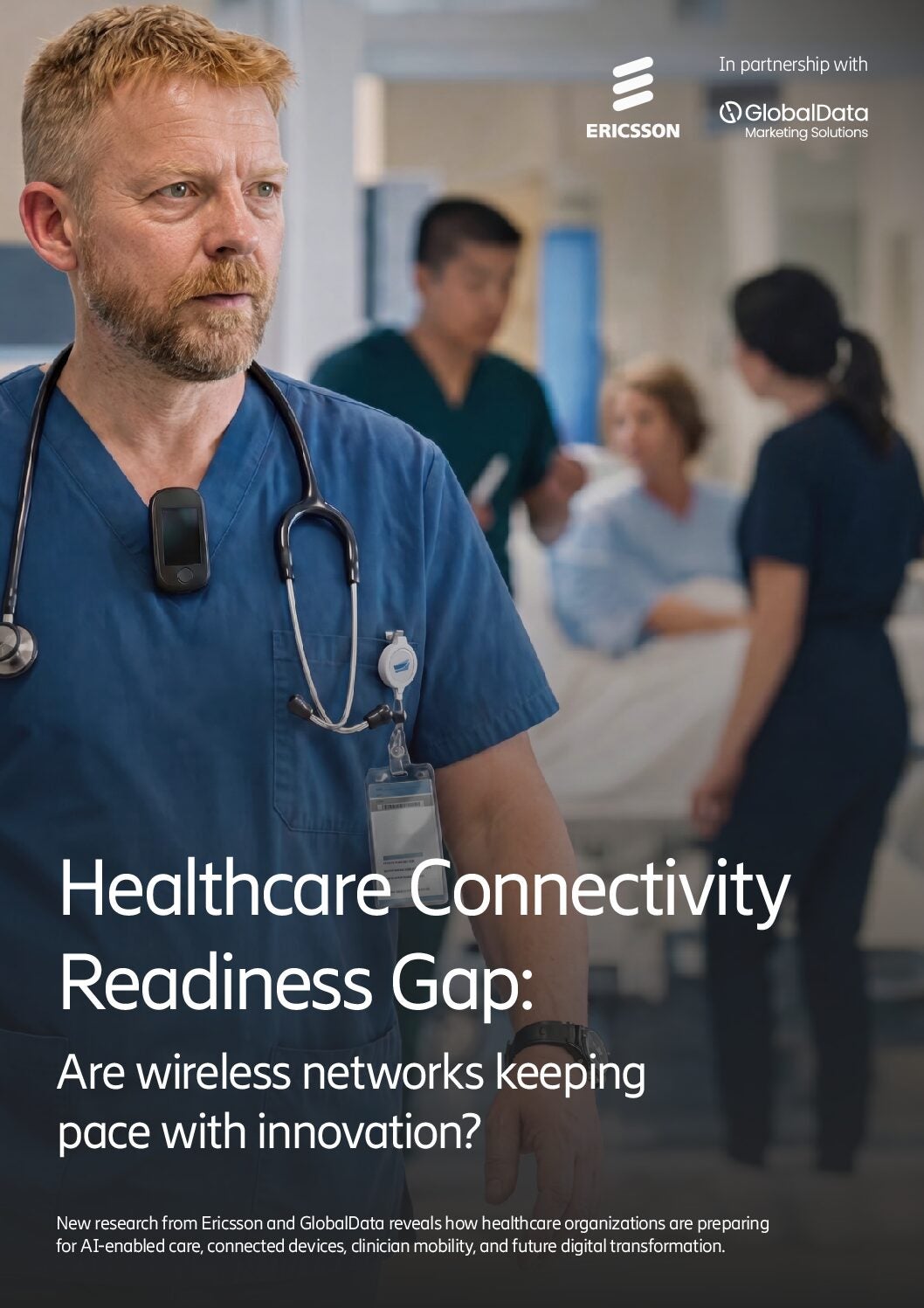
Is your wireless network keeping pace with your AI strategy?
As many providers move from AI experimentation to real-world deployment, attention is shifting to the infrastructure required to support these technologies at scale. From mobile clinicians and connected medical devices to real-time patient monitoring and data-intensive applications, healthcare leaders are increasingly evaluating whether their existing wireless environments can deliver the coverage, performance, and reliability needed for the next generation of connected care.
While most hospitals rely heavily on Wi‑Fi for clinical connectivity, many organizations are beginning to evaluate whether a Wi‑Fi-only approach can support future requirements such as AI-enabled workflows, mobile clinicians, connected medical devices, and mission-critical communications. As healthcare environments become more complex, leaders are increasingly exploring how public cellular, neutral host, and private 5G technologies may complement existing networks and address persistent coverage and mobility challenges.
New benchmark research from Ericsson and GlobalData suggests many healthcare organizations are not fully confident of their current connectivity environments.
According to the survey, healthcare organizations rated their preparedness for future connectivity requirements at just 2.4 out of 5, raising concerns about whether existing wireless infrastructures can adequately support the next generation of healthcare technologies.
Why does AI adoption depend on network readiness?
Artificial Intelligence is quickly becoming a strategic priority for healthcare organizations. In the survey, AI and predictive analytics rank among the top technologies respondents are actively exploring as they look to improve efficiency, enhance clinical decision-making, and support new models of care.
AI is already transforming areas such as radiology, helping improve diagnostic precision, accelerate imaging workflows, and support earlier detection of disease. Looking ahead, predictive analytics are expected to play an increasingly important role as healthcare organizations move toward more proactive, data-driven approaches to care delivery.
However, successful AI adoption depends on more than the technology itself. These applications require reliable, high-performance connectivity capable of supporting large volumes of data, low latency, and continuous access to critical clinical systems. Survey respondents identified network performance, cybersecurity concerns, and integration challenges among the key barriers standing in the way of future innovation.
The findings point to a broader challenge healthcare leaders are increasingly asking: How can hospitals successfully adopt AI if their wireless network infrastructure isn’t prepared to support it? As healthcare becomes more connected, reliable wireless connectivity supported by enhanced public cellular strategies or private 5G networks is becoming a foundational requirement for innovation.
How are connectivity challenges affecting patient care and operations?
Preparing for future technologies is important, but healthcare providers are also navigating connectivity challenges that impact care delivery today.
Modern hospitals depend on uninterrupted connectivity for numerous aspects of clinical operations—from electronic health records and clinician communications to connected medical devices and mobile workflows. As clinicians move between departments, buildings, elevators, stairwells, and campus locations, maintaining seamless connectivity becomes increasingly important.
Yet survey respondents reported persistent challenges with existing wireless environments, including coverage gaps, unreliable connectivity, and slow network performance. Overall satisfaction with current wireless networks averaged just 2.1 out of 5.
According to respondents, one of the most significant impacts of underperforming networks is disrupted communications across care teams. Secure messaging platforms, mobile alerts, video communications, and other digital collaboration tools have become essential to modern healthcare delivery. When connectivity is inconsistent, information sharing becomes less efficient, workflows become more fragmented, and clinicians are forced to spend valuable time working around technology limitations.
These challenges illustrate an important reality: connectivity is no longer simply an IT issue. It has become a foundational requirement for efficient clinical operations and the delivery of modern patient care.
Is your wireless connectivity strategy ready for what’s next?
AI, predictive analytics, connected medical devices, and digital care models are rapidly reshaping healthcare. But innovation is only as effective as the infrastructure behind it.
The Ericsson and GlobalData Healthcare Connectivity Benchmark reveals where healthcare organizations stand today, the challenges they face, and what may be needed to support the next generation of care delivery.
Download the report to learn:
- How healthcare organizations rate their connectivity readiness
- The biggest barriers to supporting AI and emerging technologies
- Why many leaders believe connectivity is becoming a strategic priority
Healthcare leaders are increasingly asking whether their wireless networks are ready for AI, predictive analytics, and the next generation of connected care. The benchmark findings provide a clearer picture of where organizations stand today—and what may be required to close the readiness gap. Download the report to explore the full results.
